
BLIND TO THE BLAST RADIUS WEBINAR REPLAY

Why the AI Era's Biggest Risk Is the Infrastructure Powering It

You cannot have an AI revolution without energy and infrastructure, and you cannot keep that infrastructure without taking OT cybersecurity seriously. In this video Rob Lee and Rob Joyce sit down for a candid, no-hype conversation on the real risks, the real defenses, and the decisions security leaders can no longer afford to delay.

Watch The Video

Speakers

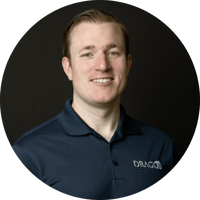
rob lee

Rob Lee

Co-Founder and CEO, Dragos

One of the world's foremost ICS/OT threat intelligence authorities. Co-founder of Dragos, former U.S. Air Force Cyber Warfare Operations Officer, NSA analyst, and Lieutenant Colonel in the Army National Guard. A repeat World Economic Forum speaker who co-chairs the Global Futures Council on Cybersecurity and serves on WEF cyber resilience subcommittees for Oil and Gas and Electricity.


header-nav-dragos-logo-8-25


rob joyce

Rob Joyce

Former NSA Director of Cybersecurity

34-year NSA veteran who led the elite Tailored Access Operations unit, served as Special Assistant to the President, and Cybersecurity Coordinator on the National Security Council. Now advises OpenAI on its Safety and Security Committee, with a direct view into how frontier AI systems are being secured and the national security implications of AI at scale.


nsa-national-security-agency-logo-black-and-white


harry

Harry Thomas

Co-Founder and CTO, Frenos

Co-founder and CTO of Frenos, and architect of SAIRA, the AI reasoning agent at the core of the industry's first simulated OT penetration testing platform. A practitioner with deep roots in critical infrastructure defense, Harry leads Frenos's work on AI-driven adversarial simulation, digital twin modeling, and the vulnerability intelligence that maps attack chains across OT environments at machine speed.


Frenos


hollie

Hollie Hennessy (Moderator)

Principal Analyst, OT/IoT Cybersecurity, Omdia

One of the industry's leading independent analysts covering the OT and IoT cybersecurity market. At Omdia, Hollie authors the OT Cybersecurity Platforms Market Radar, the OT Cybersecurity Services Universe, and annual decision-maker survey research spanning hundreds of industrial organizations. A regular presence at Black Hat and DEF CON with deep expertise in OT regulation, standards, and market dynamics.

omdia-logo-prod-white


About This Webinar

Every AI data center, every large language model, every GPU cluster running inference at scale runs on electricity. That electricity depends on grids, pipelines, substations, turbines, and water systems, all of which are controlled by operational technology. The AI era is not just a software story. It is an energy and infrastructure story.

At Davos this year, Dragos CEO Rob Lee issued a warning that most AI coverage missed entirely: you cannot have an AI or space revolution without energy and infrastructure, and you cannot keep that infrastructure for long without OT cybersecurity. The cybersecurity of AI models and IT systems is receiving attention. The cybersecurity of the operational technology those systems depend on is not. Organizations are expanding their attack surface with new digital connections, increasing complexity through AI integrations, and doing all of it while remaining blind to what is happening inside their own OT networks.The adversary threat has escalated to match. Nation-state and criminal actors are no longer just sitting inside industrial networks waiting. They are mapping control loops, learning physical processes at the operational level, and demonstrating a clear willingness to take the next step toward real-world disruption. The consequence is not a data breach. It is the lights going out, fuel not moving, water not flowing, and the AI economy losing the foundation it runs on.

There is a compounding dimension to this threat that the industry is only beginning to reckon with. AI-driven vulnerability research is compressing the time between discovery and exploitation in ways that OT environments were never designed to absorb. Vulnerabilities that once required weeks of human research to surface are now being found in hours. As Frenos analyzed in the wake of Anthropic's Project Glasswing, the hard part for defenders was never about knowing a CVE. It is knowing whether an adversary can reach, chain, and exploit it inside a specific operational environment before the 90-day disclosure clock runs out.

This webinar replay is about that intersection: the infrastructure the AI economy cannot survive without, the adversaries targeting it, and the security frameworks, tools, and decisions that determine whether critical infrastructure remains available when it matters most.

What You Will Walk Away With

  • Why the AI economy's greatest single point of failure is the energy and OT infrastructure powering it, and what that means for security strategy
  • How nation-state and criminal actors have escalated from network access to control loop mapping, and what real-world disruption now looks like
  • What AI-driven vulnerability discovery means for OT defenders and why traditional patch timelines are no longer a viable risk model
  • What responsible AI deployment looks like from the builder's perspective and why OT security is the precondition, not an afterthought
  • The governance, monitoring, and vendor frameworks critical infrastructure operators need to maintain availability as AI dependence grows
  • An honest assessment of where the gaps are and why the knowledge and tools to close them already exist

Get in Touch with Our Team

Strengthen your organization's ICS/OT cybersecurity posture with our Simulated OT Penetration Testing Platform