
Webinar Replay: Blind to the Blast Radius


Webinars · Critical Infrastructure · May 20, 2026
Webinar Replay: Blind to the Blast Radius
This webinar examines why the AI economy depends on secure energy and operational technology infrastructure. Industry leaders discuss escalating adversary activity, AI-driven vulnerability discovery, and the decisions critical infrastructure operators face.
Why the AI Era’s Biggest Risk Is the Infrastructure Powering It
You cannot have an AI revolution without energy and infrastructure. You cannot keep that infrastructure without taking OT cybersecurity seriously.
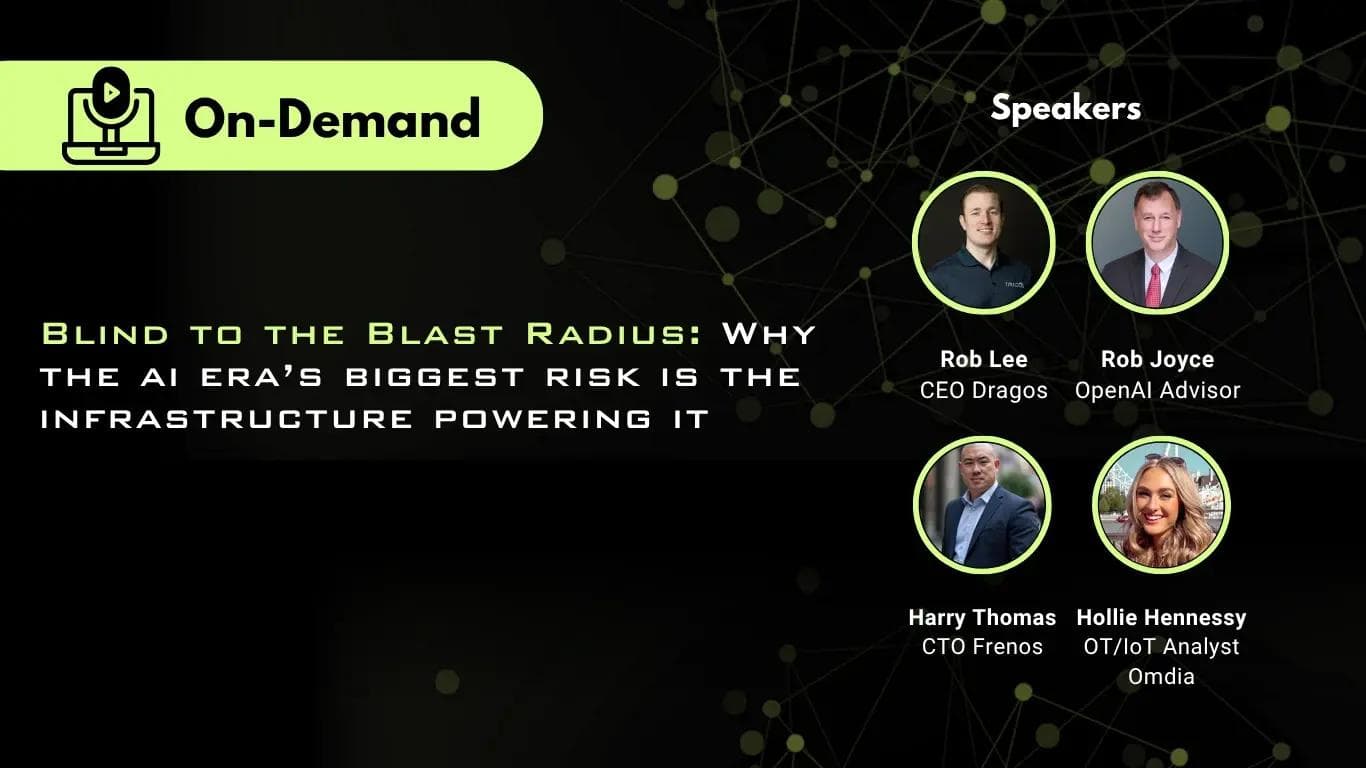
In this video, Rob Lee and Rob Joyce sit down for a candid, no-hype conversation about real risks, real defenses, and the decisions security leaders can no longer afford to delay.
Watch the video
Speakers
Rob Lee
Co-Founder and CEO, Dragos
Rob Lee is one of the world’s foremost ICS and OT threat intelligence authorities. He co-founded Dragos and previously served as a U.S. Air Force Cyber Warfare Operations Officer, NSA analyst, and Lieutenant Colonel in the Army National Guard.
He is a repeat World Economic Forum speaker. He also co-chairs the Global Futures Council on Cybersecurity and serves on WEF cyber resilience subcommittees for Oil and Gas and Electricity.
Rob Joyce
Former NSA Director of Cybersecurity
Rob Joyce is a 34-year NSA veteran who led the Tailored Access Operations unit. He also served as Special Assistant to the President and Cybersecurity Coordinator on the National Security Council.
He now advises OpenAI through its Safety and Security Committee, giving him a direct view into the security of frontier AI systems and the national security implications of AI at scale.
Harry Thomas
Co-Founder and CTO, Frenos
Harry Thomas is the co-founder and CTO of Frenos. He is also the architect of SAIRA, the AI reasoning agent at the core of the industry’s first simulated OT penetration testing platform.
With deep roots in critical infrastructure defense, Harry leads Frenos’s work on AI-driven adversarial simulation, digital twin modeling, and vulnerability intelligence that maps attack chains across OT environments at machine speed.
Hollie Hennessy
Moderator and Principal Analyst, OT/IoT Cybersecurity, Omdia
Hollie Hennessy is one of the industry’s leading independent analysts covering the OT and IoT cybersecurity market.
At Omdia, she authors the OT Cybersecurity Platforms Market Radar, the OT Cybersecurity Services Universe, and annual decision-maker survey research spanning hundreds of industrial organizations. She is also a regular presence at Black Hat and DEF CON, with deep expertise in OT regulation, standards, and market dynamics.
About This Webinar
Every AI data center, large language model, and GPU cluster running inference at scale depends on electricity. That electricity relies on grids, pipelines, substations, turbines, and water systems controlled by operational technology.
The AI era is not only a software story. It is also an energy and infrastructure story.
At Davos this year, Dragos CEO Rob Lee warned that an AI or space revolution cannot exist without energy and infrastructure. That infrastructure cannot remain available without OT cybersecurity.
The security of AI models and IT systems is receiving attention. The security of the operational technology beneath those systems is not receiving the same attention. Organizations are adding digital connections and increasing complexity through AI integrations while remaining blind to activity inside their OT networks.
The adversary threat has escalated as well. Nation-state and criminal actors are not simply waiting inside industrial networks. They are mapping control loops, learning physical processes, and demonstrating a willingness to move toward real-world disruption.
The potential consequence is not limited to a data breach. It includes lights going out, fuel not moving, water not flowing, and the AI economy losing the foundation on which it operates.
AI-driven vulnerability research adds another dimension. It is compressing the time between discovery and exploitation in ways OT environments were not designed to absorb. Vulnerabilities that once required weeks of human research can now be found in hours.
As Frenos analyzed following Anthropic’s Project Glasswing, knowing a CVE is not the hardest part for defenders. The harder question is whether an adversary can reach, chain, and exploit it inside a specific operational environment before the 90-day disclosure clock expires.
This webinar explores that intersection. It examines the infrastructure the AI economy depends on, the adversaries targeting it, and the security frameworks, tools, and decisions that help keep critical infrastructure available when it matters most.
What You Will Learn
- Why energy and OT infrastructure may represent the AI economy’s greatest single point of failure, and what that means for security strategy
- How nation-state and criminal actors have progressed from network access to control loop mapping
- What real-world disruption can look like in critical infrastructure environments
- What AI-driven vulnerability discovery means for OT defenders
- Why traditional patch timelines may no longer provide a viable risk model
- What responsible AI deployment looks like from the builder’s perspective
- Why OT security is a precondition for responsible AI deployment rather than an afterthought
- Which governance, monitoring, and vendor frameworks critical infrastructure operators need as AI dependence grows
- Where security gaps remain and why the knowledge and tools to address them already exist
Related Resources
1-Day Simulated OT Pentest
Solution Brief
Learn how Frenos’s simulated OT penetration testing platform can help organizations understand and improve their OT security posture at scale.
S4x26 Case Study
Case Study
At the S4x26 POC Pavilion, Frenos completed 154,000 OT attack path simulations in 17 minutes and 7 seconds during a documented engagement.
Starting from three assumed-breach points in the iDMZ, Plant Operations, and Enterprise, the platform validated 18 attack paths into the critical Rockwell and Siemens zone. Those paths were exploitable based on the controls, firewall rules, routing, and configurations modeled in the digital twin.
Threat Intelligence
Solution Brief for Critical Infrastructure
Transform static threat intelligence into dynamic attack simulations. Reveal how specific threat actors could compromise your OT environment before they try.
Related links
- Solution Briefs 1-Day Simulated OT Pentest Take a deep dive into understanding how Frenos' simulated OT penetration testing platform allows you to understand and improve your OT security posture at scale. Read more
- Case Studies S4x26 Case Study At the S4x26 POC Pavilion, Frenos completed 154,000 OT attack path simulations in 17 minutes and 7 seconds in a documented engagement. From three assumed-breach starting points (iDMZ, Plant Operations, Enterprise), the platform validated 18 attack paths into the critical Rockwell and Siemens zone. Those paths are exploitable given the actual controls, firewall rules, routing, and configurations modeled in the digital twin. Read more
- Solution Briefs - Critical Infrastructure Threat Intelligence Transform static threat intelligence into dynamic attack simulations. Reveal exactly how specific threat actors could compromise your OT environment before they try. Read more
Related Resources


Why OT Cybersecurity Assessments Need to Evolve
Learn why OT cybersecurity assessments are moving from manual reviews to continuous assessment without testing live production systems.
Read more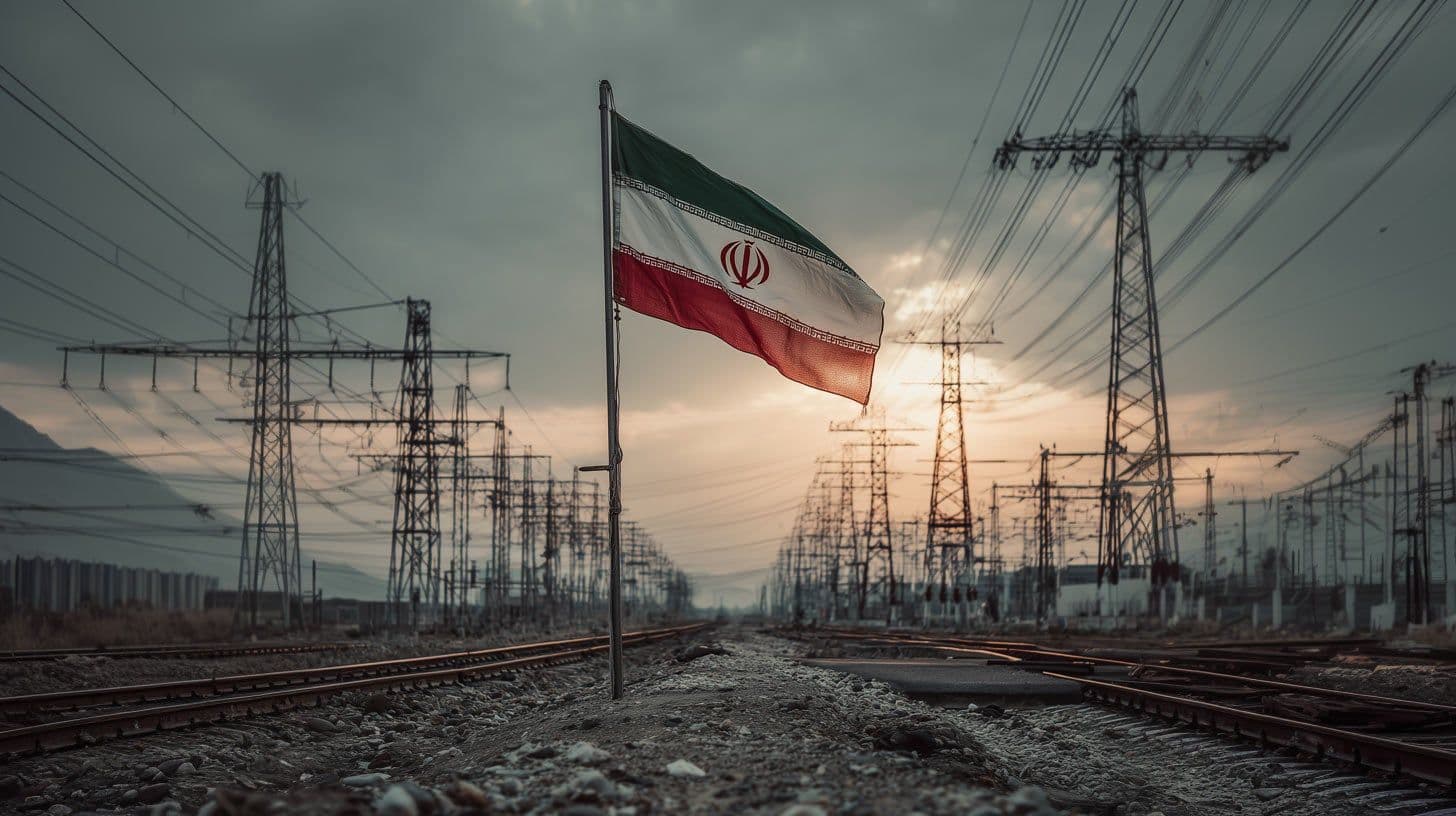
Weaponizing Threat Intelligence Against Iranian Ransomware Enablers
See how SAIRA turns intelligence on Iranian ransomware enablers into adversarial simulations that help validate security controls.
Read more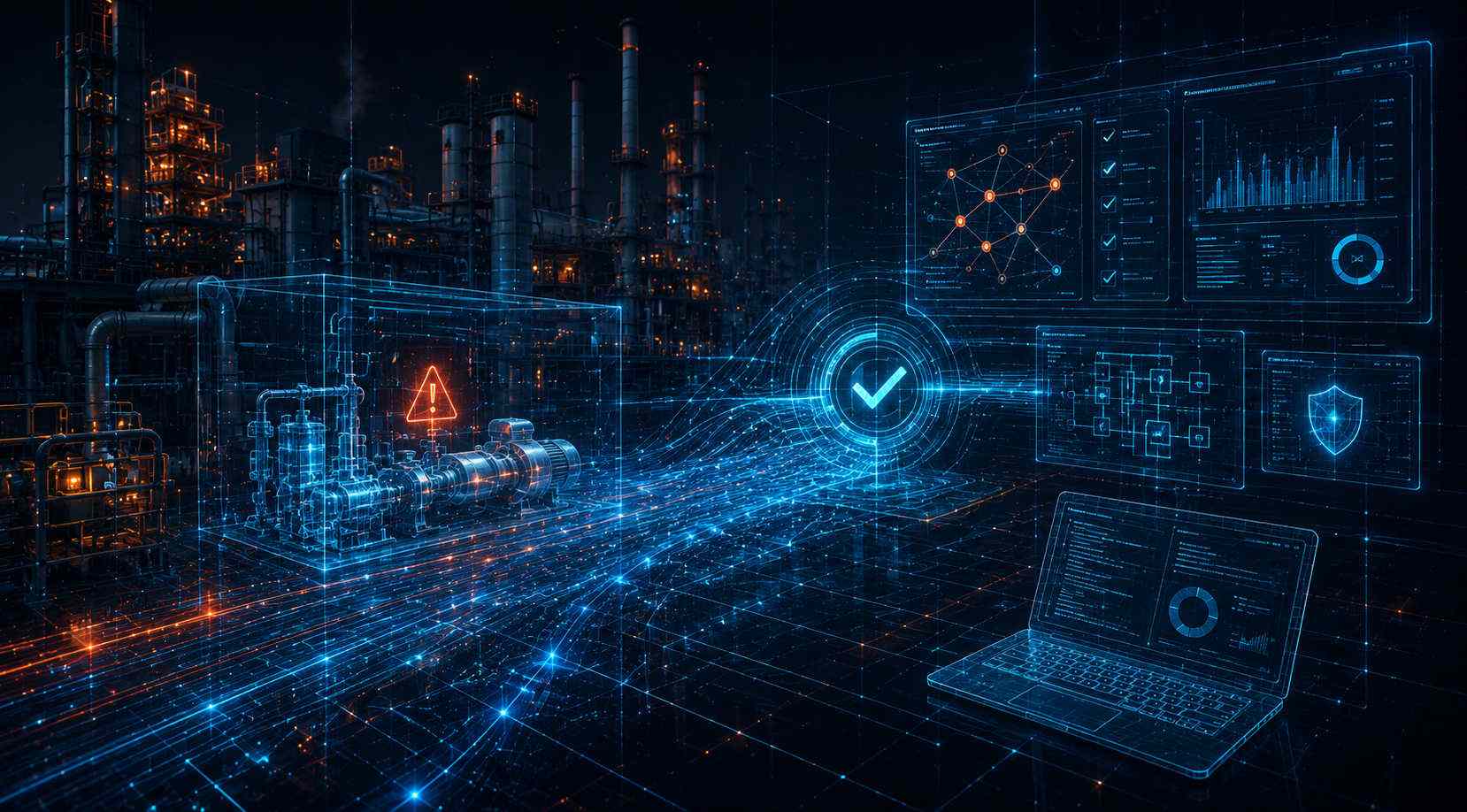
AI Vulnerability Discovery in OT: From Findings to Safe Decisions
Learn how OT teams can validate AI-discovered vulnerabilities in digital twins, assess operational impact, and prioritize safer mitigation decisions.
Read more