
Efficient, Effective, Non-Disruptive: The New Era of OT Security Testing


Efficient, Effective, Non-Disruptive: The New Era of OT Security Testing
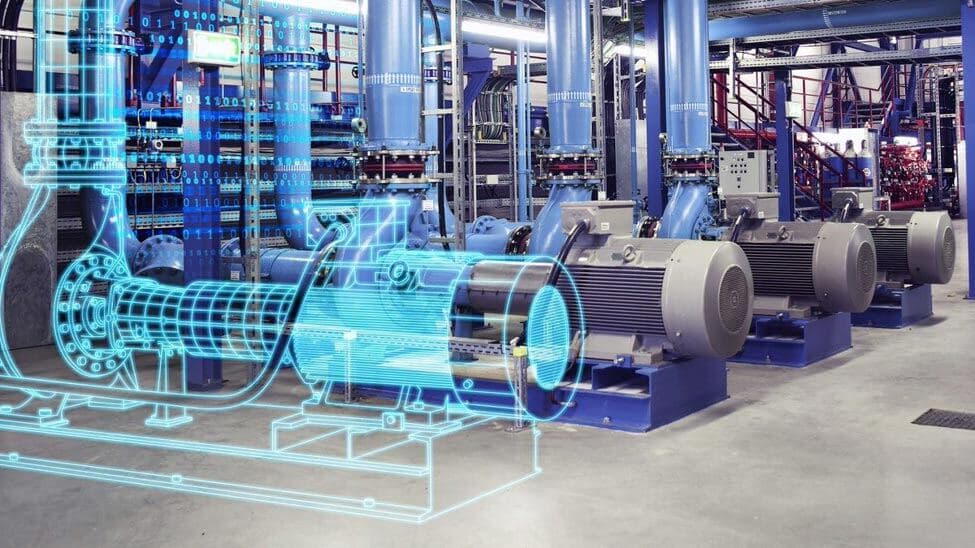
AI-enhanced digital twins can improve OT security testing by moving simulations and assessment activity into a virtual model of the production environment. This supports continuous, repeatable assessments and actionable findings without actively testing live production systems.
Managing the security of operational technology is no small feat. I know this firsthand as the CTO of Frenos.
OT asset owners must protect critical infrastructure while keeping operations running. Traditional OT security assessments can be expensive, time-consuming, and disruptive to production systems. There is an urgent need for approaches that deliver precise, actionable insights without compromising safety.
Digital twin technology, enhanced by advanced artificial intelligence, offers a path toward continuous, safe, and cost-effective OT security assessments.
Why Traditional OT Security Assessments Fall Short
Methods designed for IT do not always translate well to industrial systems. Active vulnerability assessments in live OT environments can involve intrusive scanning that interferes with critical processes.
To limit that risk, organizations may reduce the scope of an assessment or rely on paper-based evaluations. These approaches provide only a point-in-time view and may miss changes affecting the OT environment.
Organizations also face several practical constraints:
- Active assessments may need to be conducted in an environment that closely mirrors production.
- Building and maintaining a realistic test environment can require significant time and resources.
- Assessment quality and outcomes may vary based on the assessor’s expertise.
- Testing live systems can introduce operational risk.
This can leave organizations choosing between potential production disruption and an expensive test setup that may not reflect the network’s actual condition.
How Digital Twins Change OT Security Testing
A digital twin provides a virtual model of an OT network that mirrors the production environment. Teams can use that model to simulate attack scenarios, conduct network discovery, and verify accessible services without touching the live environment.
For a security assessment, the model does not need to reproduce the industrial process itself. It needs to represent security-relevant details, including:
- Operating systems and firmware versions
- Network connections
- Open ports
- Active services
- Configuration updates
- Change management records
Keeping this information current helps the digital twin remain an accurate reflection of the production network.
When this virtual model is combined with artificial intelligence, teams can evaluate possible weaknesses without performing active vulnerability scans or penetration tests against live systems. The twin can mimic connections and use configuration data to show how the environment may respond to different attack paths.
This makes it possible to observe potential vulnerabilities and understand network behavior without the risks and costs of testing directly in production.
What an Effective OT Cyber Digital Twin Requires
An effective OT security digital twin must reproduce the critical elements of the production system’s baseline configuration. That includes software, firmware, logical network structure, open ports, and active services.
Continuous updates are also important. As the live environment changes, the model must stay aligned with its current configuration.
Established data integration methods and machine learning techniques can turn the digital twin into a virtual testing environment. Within that environment, tools can simulate:
- Network discovery
- Port scanning
- Vulnerability identification
- Attack scenarios
These activities can be performed without affecting live operations. This provides assessment fidelity that previously required live testing or expensive physical test environments.
How Can OT Security Testing Be Improved?
Throughout my career, I have seen assessments take months because of manual processes, inconsistent expertise, and the cost of maintaining realistic test environments.
The strongest assessments combined multiple discovery tools with expert manual validation. Their reports clearly defined the scope, explained what was and was not evaluated, and provided context and actionable recommendations for every finding.
Digital twin technology and an advanced analytical engine can make this type of assessment more repeatable and consistent. A process that once took months may be completed in days.
This approach can provide a current view of an OT network’s security posture. It can also:
- Expose incorrect assumptions about the network’s as-built condition
- Connect findings to policy or compliance gaps
- Support strategic security decisions
- Create a continuous feedback loop for improvement
Instead of relying on outcomes that vary by assessor, organizations can establish a more consistent source of information for their cybersecurity strategy.
Benefits of Digital Twin-Based OT Security Testing
Conducting assessments in a controlled virtual model minimizes the risks associated with active testing in live environments. It also supports more frequent and comprehensive testing while maintaining operational continuity.
Practical benefits include:
- Safer assessment activity: Testing occurs in a virtual representation rather than the production environment.
- Repeatable results: Automation and consistent analytical methods reduce variation between assessments.
- More predictable costs: The digital twin approach can support a fixed-cost assessment process.
- Actionable findings: Results can include context and clear recommendations for addressing identified weaknesses.
- More frequent insight: Organizations can move beyond annual or triennial testing and receive near-real-time information about their security posture.
- Faster response: Earlier identification of vulnerabilities supports proactive remediation rather than reactive fixes.
The Future of OT Security Assessments
Digital twin technology, powered by advanced artificial intelligence, is changing how OT security assessments are conducted. An accurate virtual representation of the production environment allows teams to perform thorough and continuous assessments without risking production downtime.
This approach can help address technical and regulatory challenges while turning security assessments into an ongoing source of information for cybersecurity strategy. Work that once required months and significant financial investment can be completed in days, helping organizations keep their OT environments secure, resilient, and prepared for an evolving threat landscape.
Related Resources
1-Day Simulated OT Pentest
Explore how Frenos' simulated OT penetration testing platform helps organizations understand and improve their OT security posture at scale.
S4x26 Case Study
At the S4x26 POC Pavilion, Frenos completed 154,000 OT attack path simulations in 17 minutes and 7 seconds during a documented engagement. From three assumed-breach starting points, iDMZ, Plant Operations, and Enterprise, the platform validated 18 exploitable attack paths into the critical Rockwell and Siemens zone based on the controls, firewall rules, routing, and configurations modeled in the digital twin.
This is a specific event example, not a universal performance expectation.
Threat Intelligence
Learn how static threat intelligence can be transformed into dynamic attack simulations that show how specific threat actors could compromise an OT environment.
Related links
- Solution Briefs 1-Day Simulated OT Pentest Take a deep dive into understanding how Frenos' simulated OT penetration testing platform allows you to understand and improve your OT security posture at scale. Read more
- Case Studies S4x26 Case Study At the S4x26 POC Pavilion, Frenos completed 154,000 OT attack path simulations in 17 minutes and 7 seconds in a documented engagement. From three assumed-breach starting points (iDMZ, Plant Operations, Enterprise), the platform validated 18 attack paths into the critical Rockwell and Siemens zone. Those paths are exploitable given the actual controls, firewall rules, routing, and configurations modeled in the digital twin. Read more
- Solution Briefs - Critical Infrastructure Threat Intelligence Transform static threat intelligence into dynamic attack simulations. Reveal exactly how specific threat actors could compromise your OT environment before they try. Read more
Related Resources

Why OT Cybersecurity Assessments Need to Evolve
Learn why OT cybersecurity assessments are moving from manual reviews to continuous assessment without testing live production systems.
Read more
Weaponizing Threat Intelligence Against Iranian Ransomware Enablers
See how SAIRA turns intelligence on Iranian ransomware enablers into adversarial simulations that help validate security controls.
Read more
AI Vulnerability Discovery in OT: From Findings to Safe Decisions
Learn how OT teams can validate AI-discovered vulnerabilities in digital twins, assess operational impact, and prioritize safer mitigation decisions.
Read more